What are homes like in Aspley?
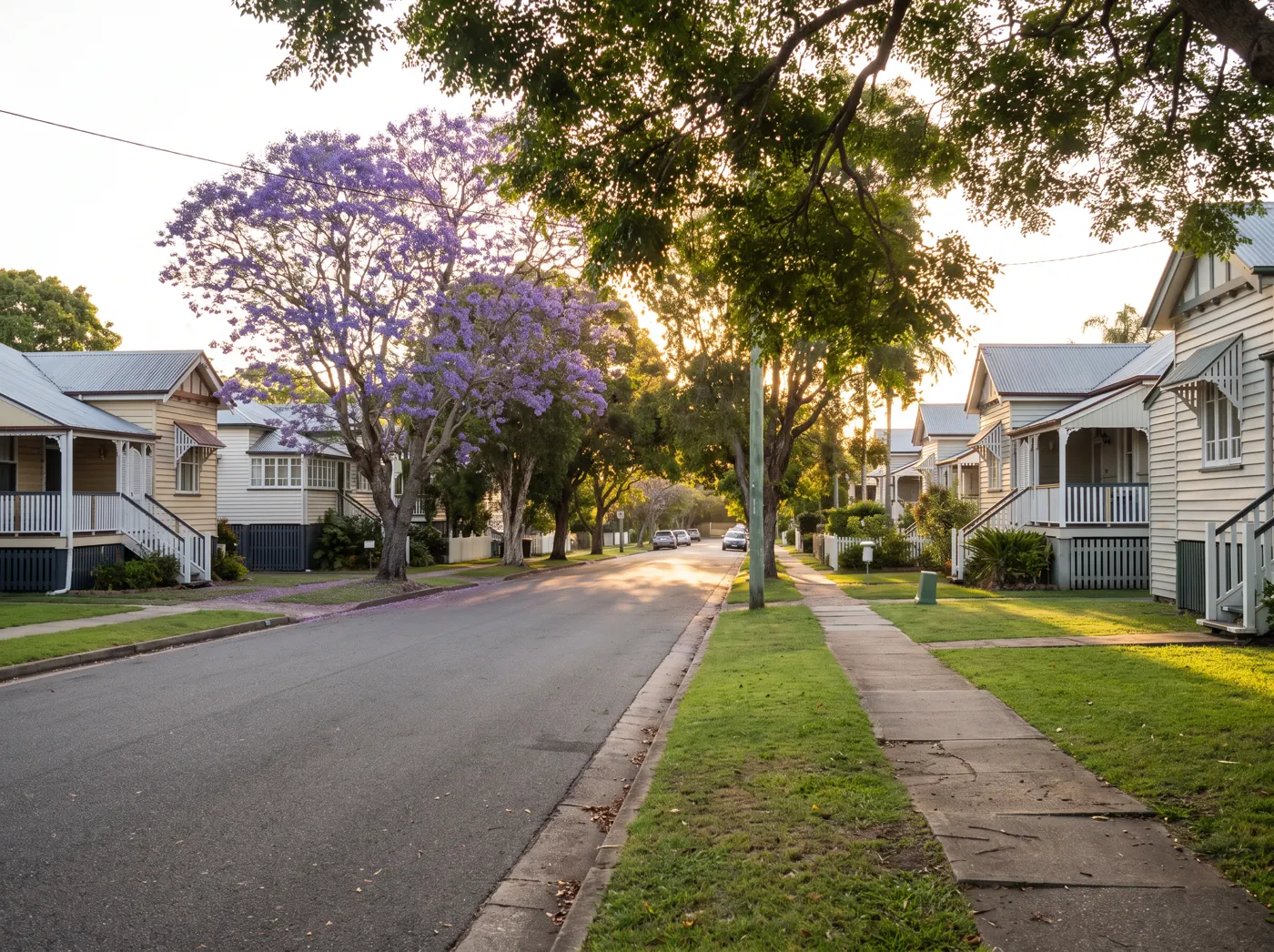
Aspley is mostly single-storey detached houses built in the 1960s and 1970s. The area stayed agricultural until the early 1950s, when the first residential estate was marketed at the corner of Gympie and Robinson Roads in 1952. Within ten years it was being promoted as a garden suburb, with many homes in styles borrowed from southern states. Growth then accelerated: the population rose from about 2,800 in 1971 to more than 10,400 by 1976. The ground is mostly flat, centred on Little Cabbage Tree Creek, and the blocks are suburban-sized with lawns and gardens rather than steep fall.
What does painting an Aspley home involve?
The typical Aspley exterior is less about walls and more about everything around them. Timber or fibro eaves, fascia boards and barge boards take the most weather on a lowset house, along with window frames and the roof. We wash first, scrape and sand timber trims, prime bare spots and finish with a durable exterior acrylic. Eave linings from that era may contain asbestos, so we treat them as such and never sand them.
Roofs are a big part of the work. Many 1970s houses have concrete tile roofs that have weathered. Coating them takes a full clean, broken tile replacement and ridge repairs before the sealer goes on.
Single-storey homes on flat land usually make access easy. Most walls can be reached from ladders and planks, without scaffold.
What we do in Aspley
- Exterior painting on eaves, fascias, trims and painted or rendered brick.
- Interior painting to update 1970s interiors, timber panelling and dark trims.
- Roof painting on weathered concrete and terracotta tile roofs.
- Commercial painting for shops, offices and showrooms along Gympie Road.
- Colour consultation to modernise a brick home while keeping trims and roof in balance.