What are homes like in Ashgrove?
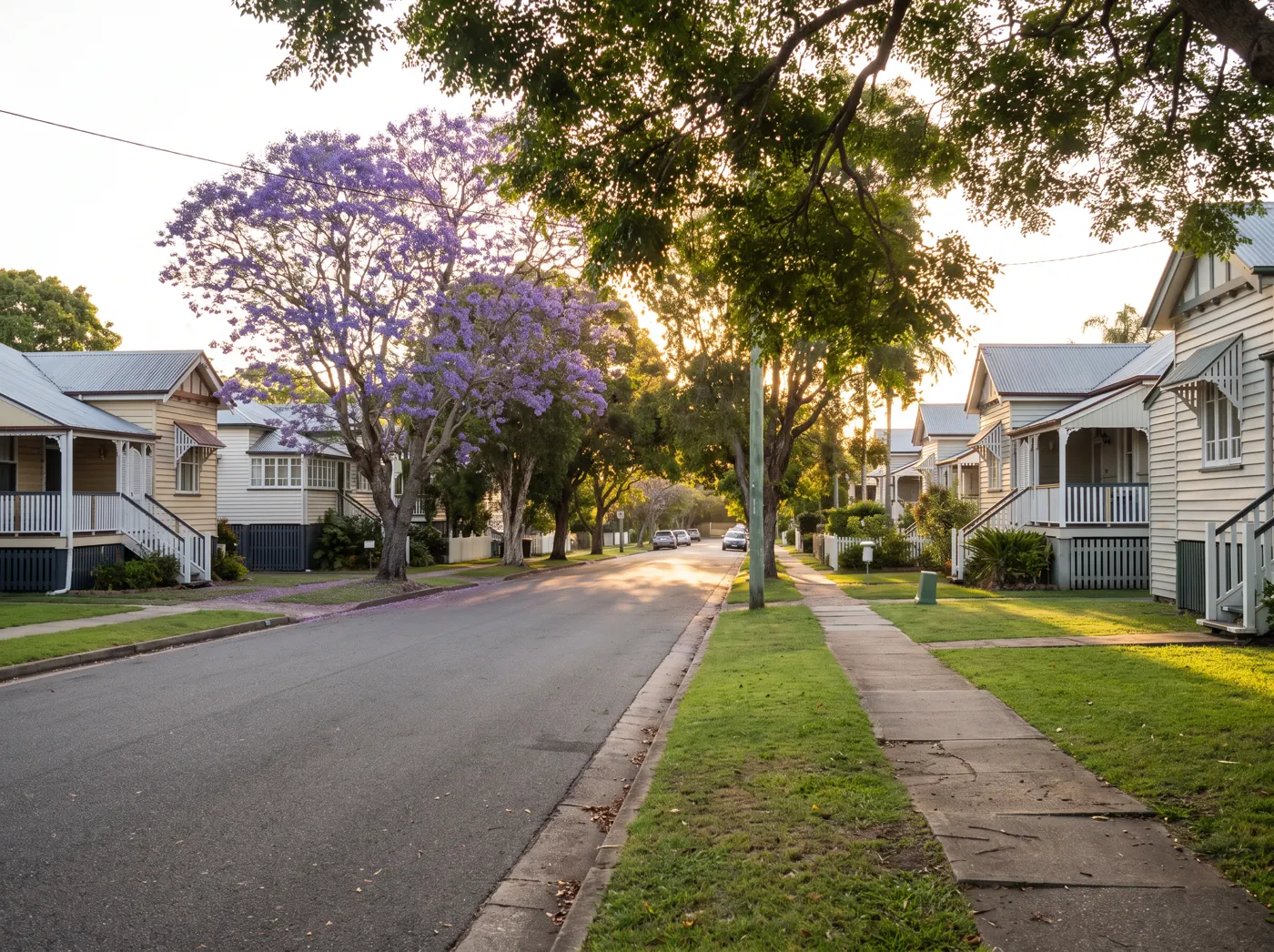
Ashgrove is defined by its interwar houses. The tram reached Jubilee Terrace in 1924 and building took off, with estates like Glenlyon Gardens promoted as a model suburb of parks and modern homes. Out of that boom came the Ashgrovian: a Queenslander with a dominant front gable, smaller gables behind, verandahs (often later enclosed) and battened skirts. Alongside it, Council heritage notes record Californian Bungalow, Spanish Mission and Tudor Revival houses, many architect-designed.
After the war the suburb filled with young families, earning the nickname "Nappy Valley", which added post-war timber and brick homes further out. A few grand 19th-century houses survive, such as Glenlyon, now part of Marist College.
What does painting an Ashgrove home involve?
Detail and access are the main challenges. A multi-gabled timber house has a lot of edges: barge boards, gable battens, finials, verandah posts and rails. Each needs scraping, sanding and filling before it's primed, and older layers may contain lead, so preparation is wet and contained. We cut in by brush on the trim and use a flexible acrylic on the weatherboards.
Ashgrove's hills add work too. Plenty of houses are single-storey at the street and two or more at the rear, so the downhill gables need scaffold rather than ladders.
Rendered Spanish Mission and brick Tudor houses need a different system again: breathable masonry coatings, and repairs to cracked render before painting.
Do creek-side Ashgrove homes need extra care?
Yes. Enoggera Creek and Ithaca Creek both run through the suburb, and Enoggera Creek reached driveways in Acacia Drive in 2011 and ran high through the suburb again in 2022. Homes on those low streets tend to carry damp and mould on lower walls. We test moisture, wash and treat mould, and seal any water stains before topcoats.
What we do in Ashgrove
- Exterior painting: Ashgrovian gables, battens and verandahs, plus rendered and brick interwar houses.
- Interior painting: VJ walls, ornate ceilings and enclosed sleepouts.
- Roof painting: iron roofs on timber homes and tiles on post-war builds.
- Colour consultation: picking trim and body colours that suit a gabled interwar house.