What are homes like in Bowen Hills?
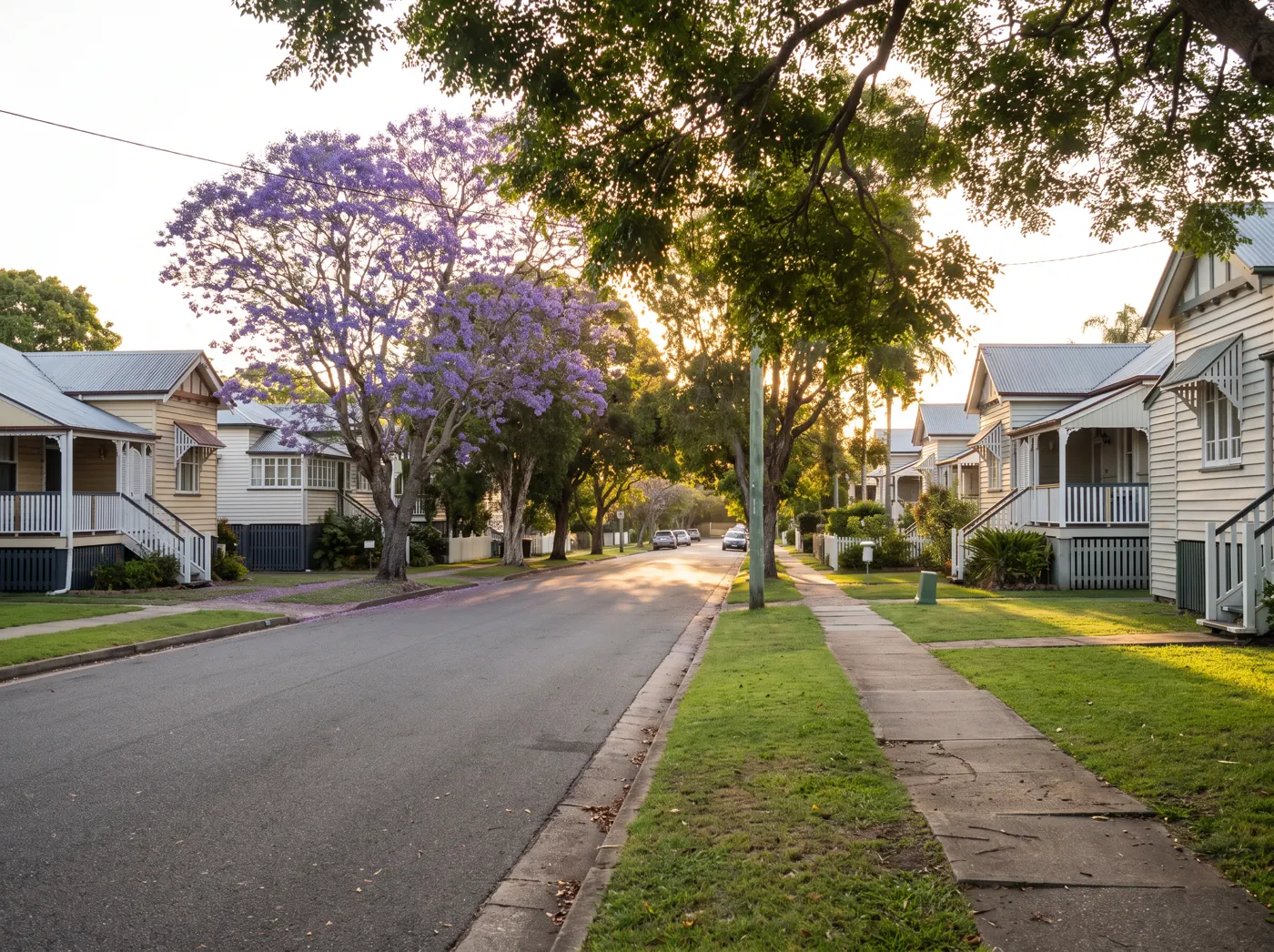
Bowen Hills homes are now mostly apartments, with a thin older layer underneath. Council named the area for urban renewal, and the 2010s brought apartment complexes around the Showgrounds and the former Cloudland site. Before that, this was a nineteenth-century suburb split by height: Council's heritage listing for Tufton House notes that small cottages dotted the lower streets while wealthier families built large homes on the high ground. Montpelier hill, which rises to 49 m, kept several of those homes, and Miegunyah (1886) survives as a house museum. Council also lists Wyeverne on Jeays Street among the surviving houses. Light industry, showrooms and offices filled in between during the twentieth century. For a painter, that history means two very different kinds of job can sit on the same block.
What does painting a Bowen Hills home involve?
It depends on which layer you live in. Apartments need interior work done to building rules: booked lifts, protected corridors, low-odour paints and tidy daily clean-up. The surviving Victorian houses and brick cottages are a different job, with old timber or masonry that needs careful scraping, crack repair, and lead-safe handling because early paints may contain lead. Where an older house has a corrugated iron roof, it can usually be cleaned, treated for rust and recoated rather than replaced.
Logistics are shaped by roads. The Inner City Bypass, Clem Jones Tunnel and Airport Link all surface here, Bowen Hills station is one of Queensland's busiest, and Ekka week changes everything near the grounds. We plan parking, deliveries and any footpath work around that.
What we do in Bowen Hills
- Interior painting for apartments and townhouses, run to strata by-laws.
- Exterior painting for the older cottages and hilltop houses, with lead-aware prep.
- Roof painting for corrugated iron and tiled roofs on the remaining houses.
- Commercial painting for showrooms and offices on the main roads.